
The right restaurant guest check type is the one that creates exactly as many readable paper records as your workflow needs. Use a 1-part check when one working sheet is enough, a 2-part check when the same order must reach two destinations, and a 3-part check only when a third team or record genuinely needs its own copy. After choosing the part count, decide whether books or loose sets fit handling at the service point and whether carbonless or carbon transfer fits the required construction.
This guide focuses on selection logic. It does not replace your restaurant’s operating procedures or local record-retention requirements, and it does not assume that one standard check works for every service model.
Quick answer
Choose the lowest part count that gives every necessary destination a readable record, then match the book or loose-set format to how staff carry, separate and store the checks.
- Use 1-part when only one paper record is needed.
- Use 2-part when two destinations need the same handwritten order.
- Use 3-part only when the third copy has a defined owner and job.
- Confirm numbering, perforation, receipt stubs, copy labels and packing separately.
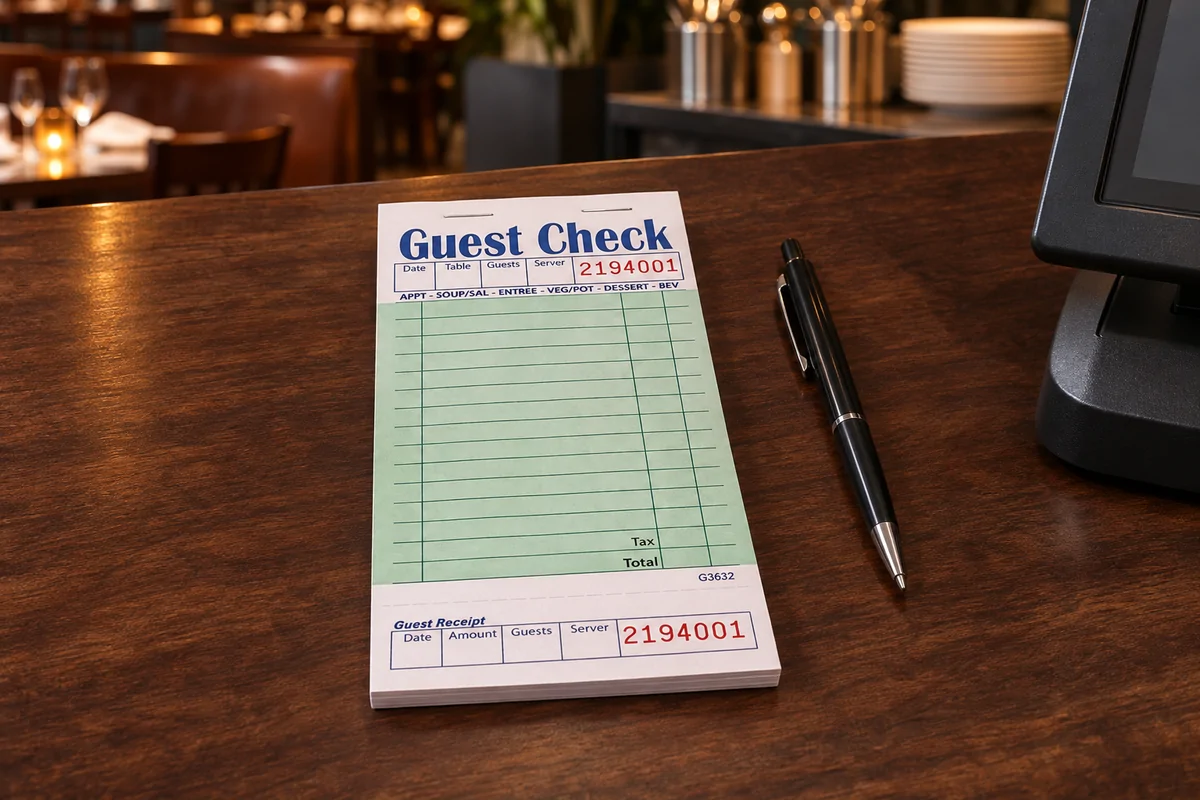
Start with the number of paper destinations
Part count should follow information flow, not habit. Map every destination that needs to read or retain the handwritten order at the same time. A destination might be a kitchen station, a server, an expediter, a bar or a customer-facing record, but the names and responsibilities vary by operation.
| Guest check type | Paper records created | Good starting point when | Main limitation to test |
|---|---|---|---|
| 1-part | 1 | Only one paper record is needed, or another system handles the remaining routing | No automatic duplicate for a second destination |
| 2-part | 2 | Two people or stations need the same handwritten information | The workflow must define which copy goes where |
| 3-part | 3 | A separate third destination needs its own readable record | Extra sheets add routing and reconciliation work if the third copy has no clear purpose |
The practical rule is simple: choose the lowest part count that covers every necessary destination. More parts are useful only when each copy has an owner and a job.
When a 1-part guest check is enough
A 1-part guest check provides one working sheet with no automatic duplicate. It can fit a simple counter-service workflow, a manual note that is entered immediately into another system, or an operation where only one station uses the paper check.
Before choosing it, ask what happens after the order is written. If the sheet must leave the server while the server still needs a paper record, one part is probably not enough. If the check remains at a single workstation or the order is transferred into a POS before the paper changes hands, a single sheet may avoid unnecessary copies.
Do not treat “1-part” as a complete specification. The buyer still needs to decide the layout, size, number of writing lines, numbering, perforation, receipt section and whether the checks should be supplied as books, pads or loose pieces.
When a 2-part guest check fits the workflow
A 2-part guest check creates an original and one readable copy. It is the natural starting point when two destinations need the same handwritten order—for example, a preparation area and the person retaining the active check.
The important design question is not simply “Do we need duplicates?” It is “Who keeps each copy, and when are the sheets separated?” That answer affects copy colors, printed labels, perforation and the order in which the sheets are assembled.
- Write a sample order as it would be taken during service.
- Send the first sheet to its real destination.
- Keep the second sheet where it would normally stay.
- Check whether both copies remain readable and contain every field each user needs.
- Note any point where staff must rewrite information or search for a missing check.
If a third team still needs the same record, decide whether that need is continuous or occasional before moving to a 3-part format.
When a 3-part guest check earns its place
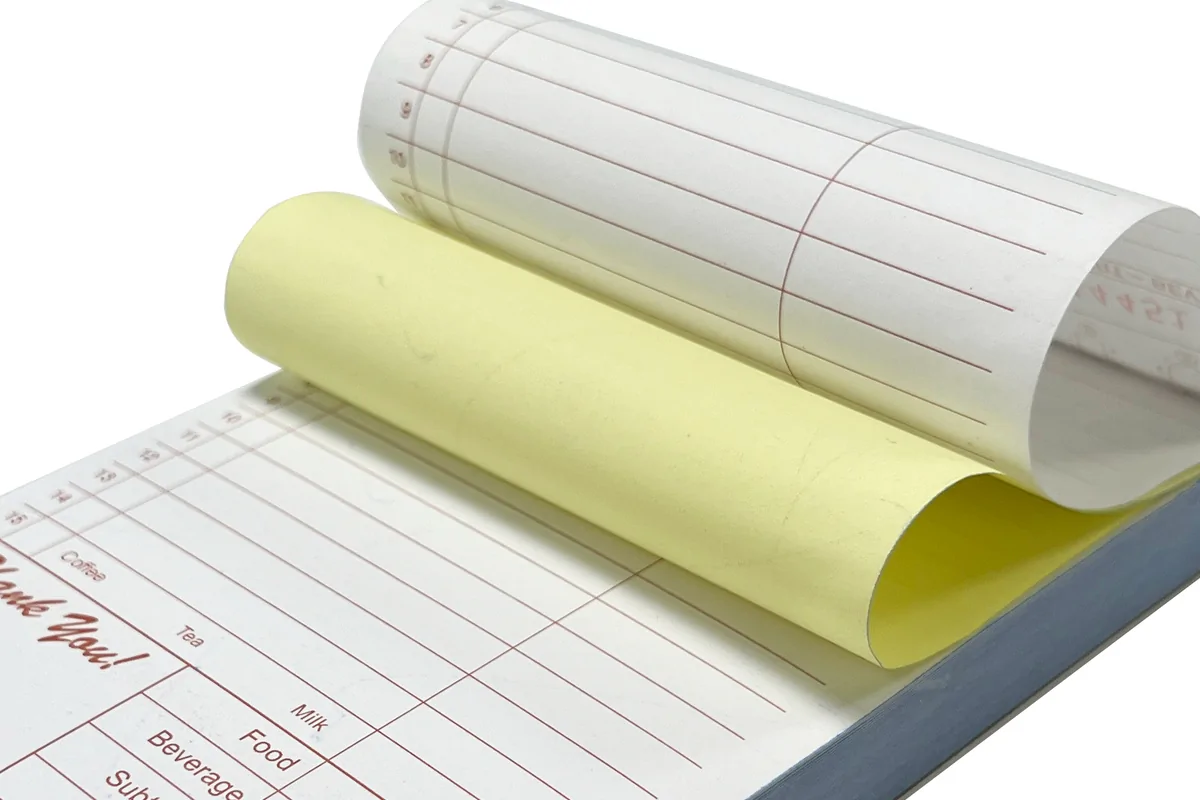
A 3-part guest check creates three readable sheets from one entry. It is justified when three separate destinations need simultaneous paper records and passing one copy between them would create delay or loss of control.
Possible routing examples include kitchen, service and bar or expediter records, but these are scenarios rather than universal rules. A restaurant with a different station layout may assign the sheets differently. Define the purpose of each part in writing and consider printing a destination label on each copy where that would reduce mistakes.
Do not select three parts merely because the format appears more complete. If the third sheet is routinely discarded or stored without a defined use, the operation is carrying an extra layer without gaining useful information. A short service trial is more reliable than choosing by convention.
Choose bound books or loose checks
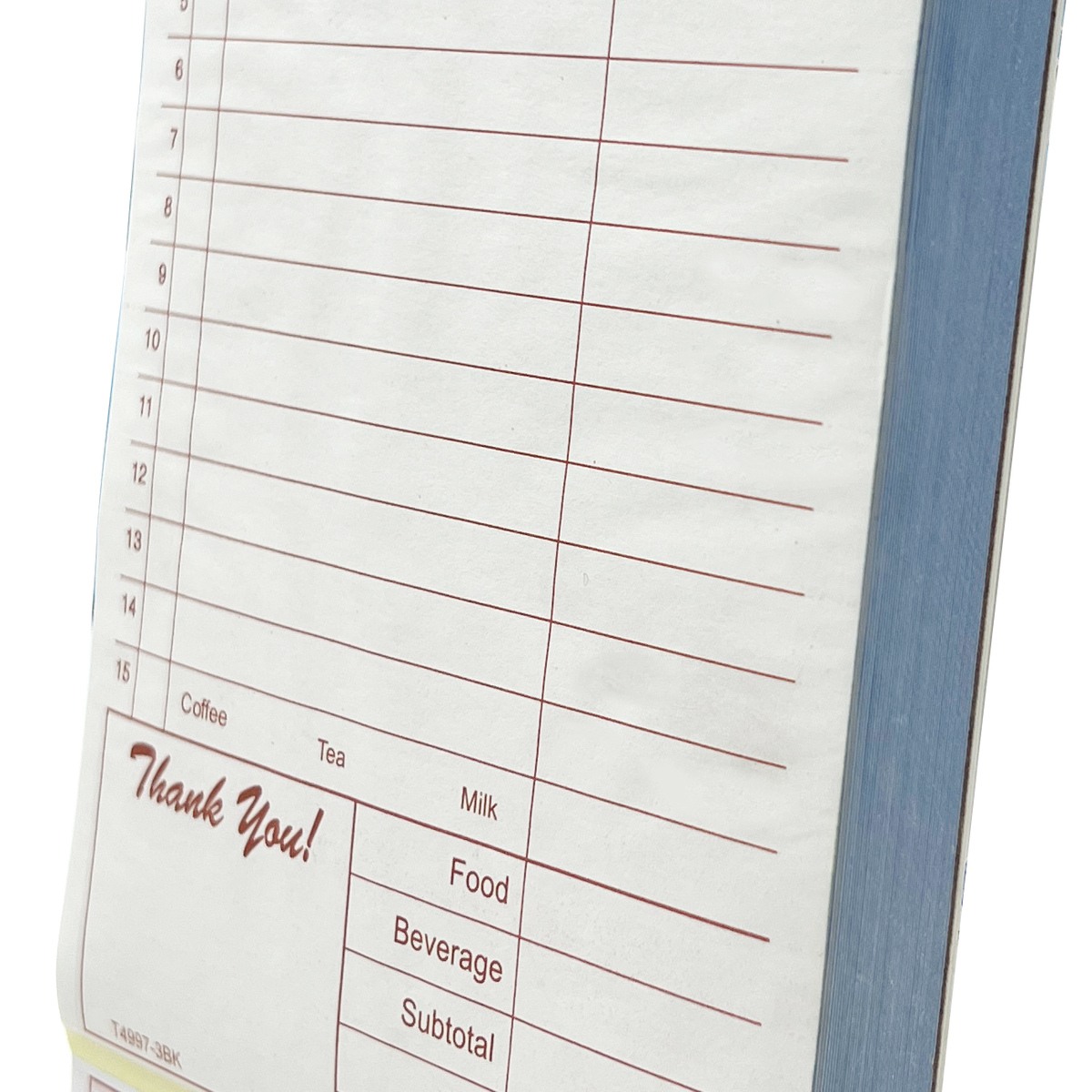
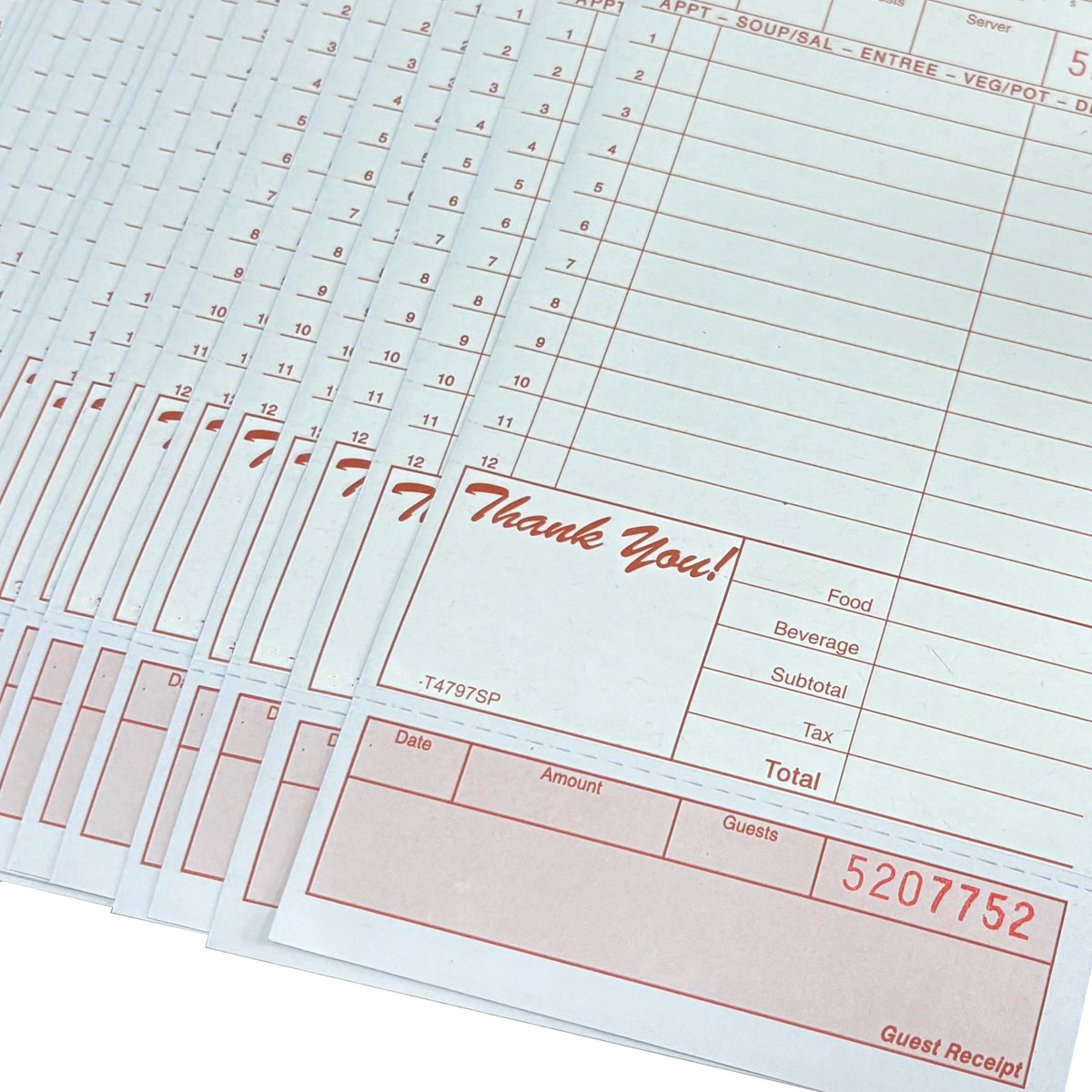
Part count explains how many copies a set creates; format explains how staff handle those sets.
Bound books or pads keep a group of checks together. They can make issue control and portability easier when a server carries checks between tables. Binding, backing and perforation need to support writing and clean sheet removal.
Loose checks are supplied as individual sets rather than bound books. They can fit fixed workstations, dispensers, check presenters or workflows that distribute sets before service. Buyers should confirm how loose sets will be stored, counted and protected from mixing.
Neither format is automatically better. Choose the one that reduces handling steps in the real service environment. You can compare current formats on the YUANMING Guest Checks page after mapping the workflow.
Decide between carbonless and carbon transfer
Multiple-part guest checks still need a method for transferring handwriting to the sheets below.
Carbonless, often called NCR, uses coated sheets that react under writing pressure to create copies. Interleaved carbon uses a separate coated sheet between the printable sheets. Industry buying guides distinguish these constructions because the set makeup and handling are different, even though both can produce duplicates.
Avoid choosing on the name alone. Ask the supplier to identify the exact copy method, show the layer order and confirm how the finished sets are bound or supplied. If the product uses multiple sheet colors, specify which destination receives each color rather than relying on an assumed industry convention.
For a broader overview of paper, parts, binding and finishing terms, use the YUANMING Paper & NCR Printing Guide.
Confirm the features that affect daily use
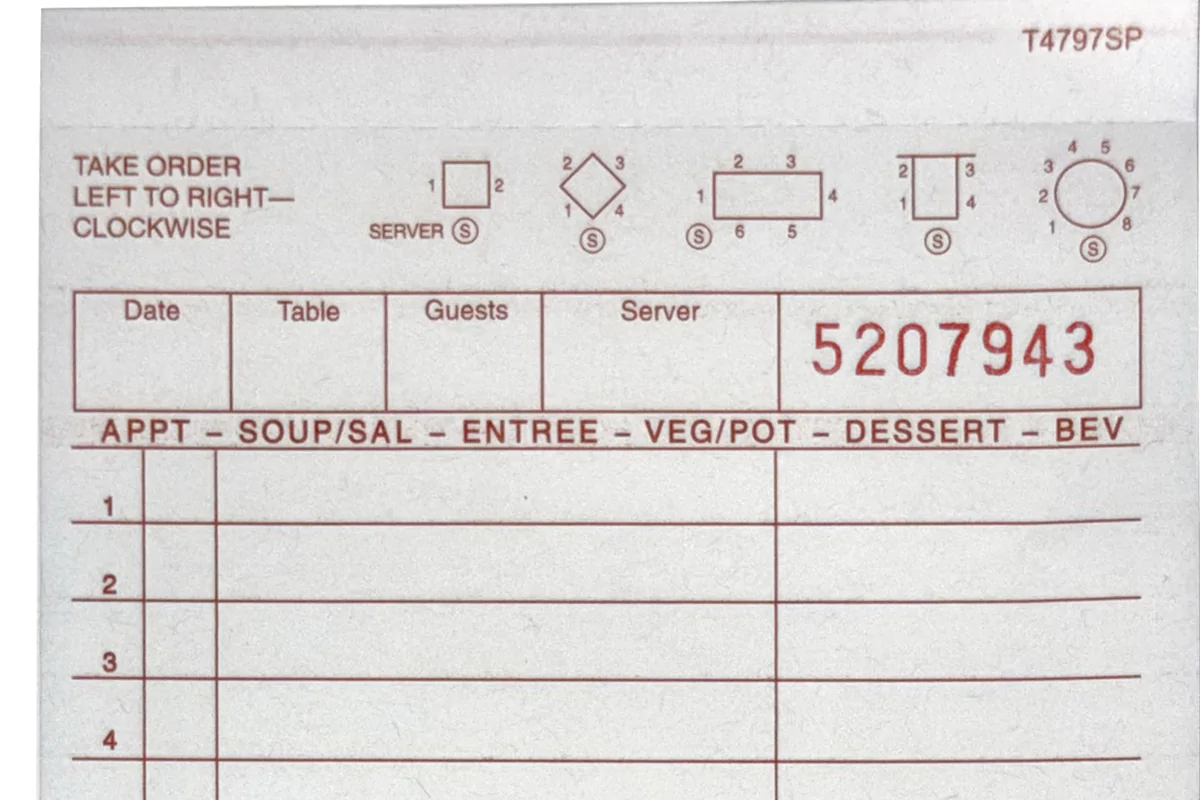
Once the basic type is clear, confirm the features that staff actually touch during a shift.
- Sequential numbering: Decide whether every set needs a unique number and where that number should repeat across the copies.
- Perforation: Mark which sheets detach, where the tear line sits and which section remains in the book.
- Receipt stub: Define who receives the stub and what information it must carry.
- Header fields: Confirm fields such as server, table, guest count and date instead of copying a generic layout.
- Order lines and prompts: Match the writable area to the menu and the amount of information normally recorded.
- Reverse-side printing: Use it only when the reverse has a clear operational job, such as beverage or routing information.
- Backing: Confirm whether staff need a rigid writing surface in the book or pad.
- Copy labels and colors: Assign each part to a destination and make that assignment understandable to staff.
Features should reduce decisions during service. A field or stub that nobody uses adds clutter; a missing routing field forces staff to improvise.
Use this guest check specification checklist
Prepare these items before asking a printer for a quote:
- Required part count: 1-part, 2-part or 3-part
- Destination and purpose of every sheet
- Copy method: carbonless/NCR, interleaved carbon or to be confirmed
- Format: bound book, pad or loose sets
- Finished width and height, or a physical reference sample
- Front and reverse layout requirements
- Sheet colors, print colors and copy labels
- Numbering range, perforation and receipt-stub requirements
- Quantity, packing and artwork files, with any unknown item clearly marked for confirmation
Do not guess missing production details. A photo or physical sample can clarify the intended construction, but the final quotation should record the agreed specification in writing.
Prepare your custom guest check request
Choose the part count by tracing where information travels, then choose the format and transfer method by observing how staff write, separate, carry and store the checks. This order prevents a familiar product name from taking the place of a real workflow decision.
When the checklist is ready, review the available custom guest check formats and send YUANMING your specification. Include the destination of each copy and mark any unconfirmed production detail so it can be resolved during quotation.